

Is this technology ready for my business? What a TRL tells us
A technology can deliver good results in the laboratory and still need further testing before being introduced into a factory.
Technology readiness levels help explain what has been demonstrated and what still needs to be tested.
An investment decision also requires assessing how the solution fits the company’s operating conditions.

A company receives a proposal to introduce an automated inspection system. The demonstration is convincing: a camera recognises components, detects defects and highlights them on screen. The documentation includes a figure: TRL 6.
What does it mean? Can the system be installed now? Does it need further development? Will it work with the company’s products and at the speed of its production line?
The TRL provides context for the discussion. It distinguishes an idea undergoing initial testing from a technology that has already demonstrated its performance under operating conditions. Understanding that difference helps clarify what is being proposed and how much work may still lie ahead.
What a technology readiness level means
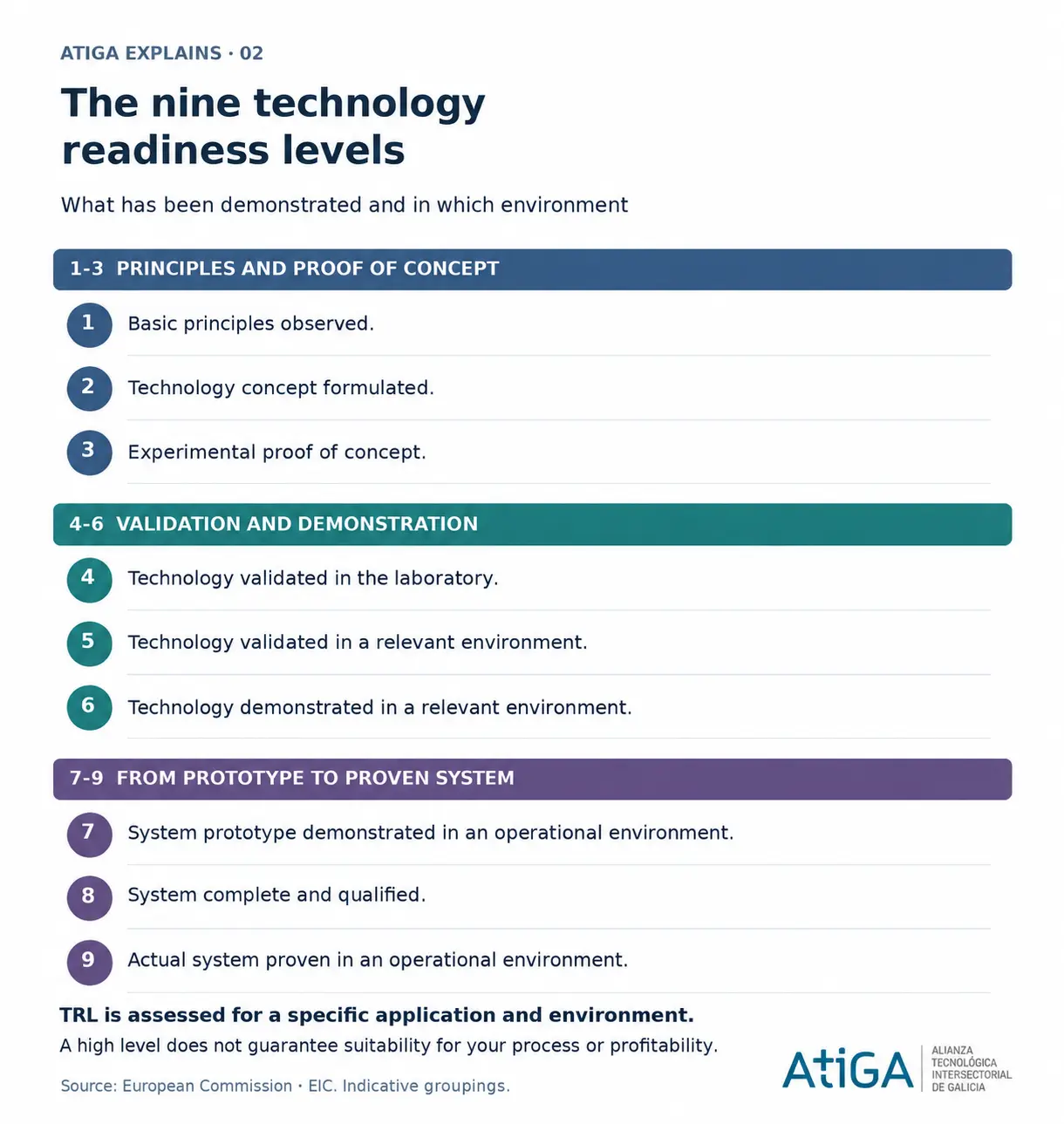
A TRL indicates what has been tested and in which environment. It does not tell you whether the technology will work in your factory. Understanding that distinction is important when evaluating a proposal. The European Innovation Council sets out definitions for the nine levels, distinguishing what has been demonstrated at each stage.
The initial levels focus on investigating a possibility and experimentally proving the concept. Technology validation and demonstration follow, first in the laboratory and later under conditions representative of the intended application. The higher levels cover prototype demonstration in an operational environment, a complete and qualified system and, finally, proven operation.
What changes between the laboratory and your process
Many variables can be controlled in a laboratory. Samples are selected, equipment is adjusted and tests are repeated under known conditions. This makes it possible to study how a technology works and identify its limitations.
A factory brings other requirements. Materials vary between batches, dust or humidity may be present, machines vibrate and the process must maintain production throughput. The technology also has to work alongside equipment that has been installed for years.
That is why the testing environment matters so much. A relevant environment reproduces the conditions that affect the technology’s performance for its intended application. An operational environment is the setting in which the system actually needs to work.
The assessment must refer to a specific application and set of conditions. If these change, it is worth reviewing which previous results remain valid and what needs to be tested again. Evidence that a solution works in another company is useful, but applying it to a different process may require further testing.
A practical example: from recognising defects to inspecting on the line
Let us return to the automated inspection example in the first article of this series. Consider a system that identifies defects in photographs of components taken under controlled lighting.
The result demonstrates a specific capability. To assess whether the system can be introduced into a production line, it is still necessary to understand how it performs with moving components, changes in orientation or rare defects.
Its integration with the rest of the process will then need to be examined. Does it detect defects in time? How many acceptable components does it reject? What happens if it loses its connection or encounters a product that was not included in the original samples?
These questions help shape the next tests. They also prevent conclusions being drawn from a demonstration that does not yet support them.
An accuracy percentage alone would not be enough. It would need to be accompanied by an explanation of how many components were assessed, which defects were included and the conditions under which the result was obtained.
Four questions before moving forward
When a proposal includes a TRL, ask for it to be explained through tests and results that the people familiar with the process can understand.
What has been tested?
A component, a function and a complete system have different scopes. The sensor may have been validated without its integration into the company’s intended equipment having been tested.
Under what conditions?
It is useful to know the materials, scale, duration and conditions of the tests. It is also important to understand how these differ from the intended use: temperature, speed, product variability or cleaning requirements.
With what results?
Review the reports and the criteria used to assess performance: which results are repeatable, where errors occur and what limitations have been identified. Problems encountered during testing also provide useful information for decision-making.
What is still needed to use it in my company?
The answer should specify the outstanding adaptations, testing and integration work, alongside the resources required. This helps distinguish what the proposal includes from the work that would need to follow.
The EURAXESS guide to research results valorisation suggests similar questions to establish a technology’s position: whether there is a proof of concept, whether it has been developed in the laboratory or whether a prototype already exists.
A high TRL does not settle the whole decision
Technological readiness is one part of the assessment. A solution may work correctly yet be too expensive for the company’s production volume. Or it may require conditions that the existing facility cannot provide.
Before investing, consider acquisition and adaptation costs, resource consumption, maintenance and spare parts availability. The assessment should also cover the training the team will need and who will provide support when a problem arises.
Safety requirements, authorisations and conditions of use must be reviewed separately. A TRL does not replace these checks or, on its own, demonstrate compliance.
Nor does it automatically indicate how much time or money is still needed to implement a solution. That effort depends on the outstanding development work and the requirements of each application.
How ATIGA’s centres can help
When a company receives a proposal that includes a TRL, a technology centre can help interpret the evidence behind that number and identify what needs to be tested under the process’s actual conditions. This may involve reviewing existing evidence, designing a representative test or assessing the adaptations required before committing to an investment.
ATIGA’s centres — AIMEN, ANFACO-CYTMA, CETIM, CTAG, Gradiant and ITG — work in fields ranging from advanced manufacturing and automotive technology to the food industry, digital technologies and energy. The question is not whether the technology works in general. It is whether it can work in your process, with your materials and at your production rate.
Questions to ask within your company before starting
- Have we defined what the technology needs to achieve and the conditions under which it will have to work?
- Do we know which tests support the proposal and how their conditions differ from our process?
- Are we clear about the outstanding work and the resources we will need to use it?
The TRL provides context for the discussion. What enables a decision is understanding what lies behind the number: what was tested, under which conditions and how far that remains from the actual process. With that information, the question moves from “does this technology work?” to something more useful: “what do we need to test to find out?”
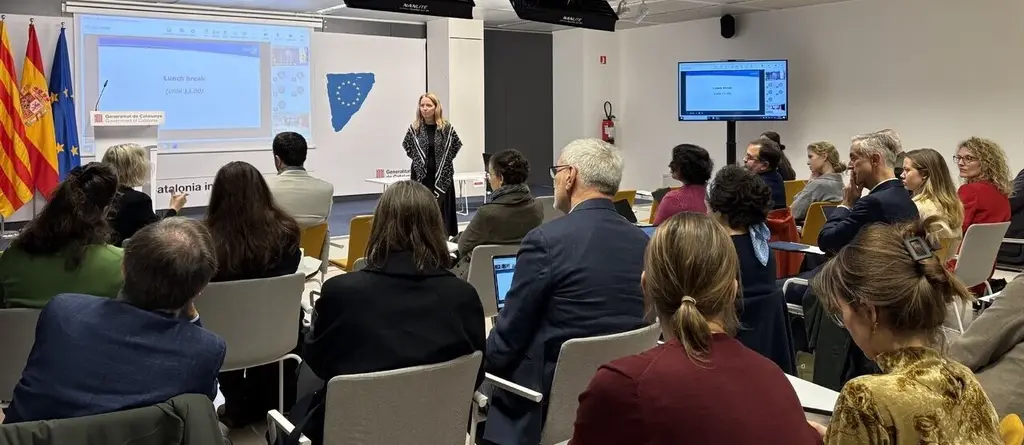
ATIGA examines the future of European R&I funding and opportunities for Galicia in Brussels
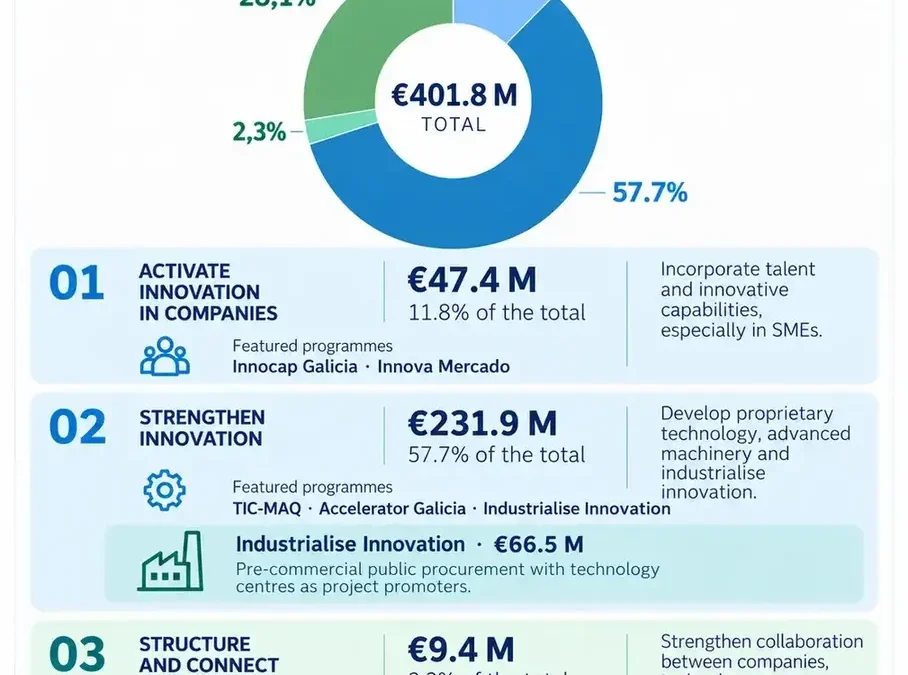
Galicia’s Innovation Strategy to Mobilise Over €400 Million to Bring Innovation into Galician Industry
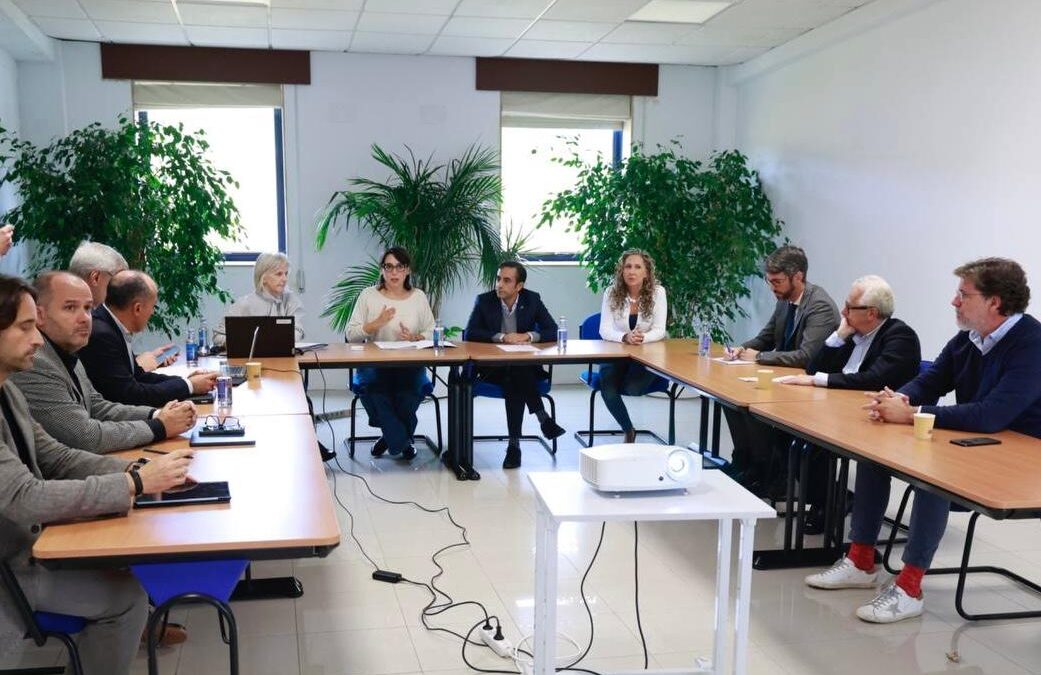
ATIGA meets with the Xunta to discuss the new strategy for industrialising innovation in Galicia
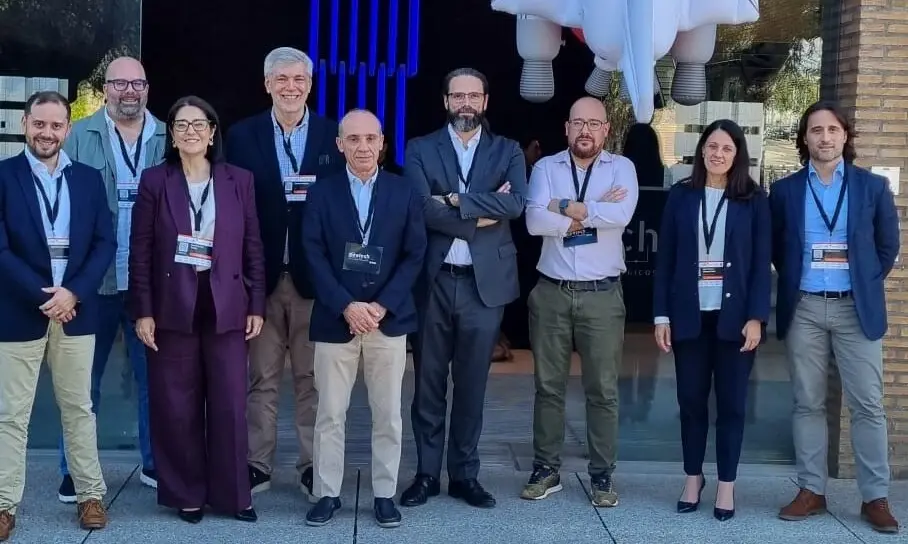
ATIGA at the forefront of Spain’s technological innovation at meetechSpain 2026

ATIGA strengthens its technological leadership after securing over €33 million for R&D&I in 2025

The ICT City of A Coruña is now a reality
Síguenos
