
Technological sovereignty: why R&D is a strategic decision for Europe, Spain and Galicia
Developing proprietary technology and having alternatives available helps reduce dependencies and gives the European and Spanish economies greater control over their decisions.
ATIGA’s technology centres contribute applied research and complementary capabilities, enabling Galicia to participate in this effort and generate new industrial opportunities.

A factory may have advanced machinery yet depend on a single supplier to modify how it operates. A sector may have orders but struggle to obtain components. An economy may generate knowledge yet capture only part of the industrial value it could create.
Dependency becomes visible when something changes: a component is no longer supplied, a platform changes its terms or a supplier withdraws from a line of business. What matters then is how much we know about the technology we use and what scope we have to adapt or replace it.
That freedom to decide lies at the heart of technological sovereignty: the ability to develop, use and maintain strategic technologies with sufficient knowledge and alternatives. It shapes both the response to disruption and the opportunities to develop proprietary products and participate in higher-value-added activities.
What gaining technological autonomy means
An economy builds autonomy in different ways: by designing components, developing manufacturing processes, protecting communications or recovering materials needed to produce equipment.
Having these capabilities makes it easier to respond to changes in supply and commercial terms. It also creates opportunities to develop proprietary products and participate in higher-value-added activities.
International cooperation is part of this effort. No region has all the knowledge and resources it needs. The question is which dependencies could jeopardise essential activities and where investment would provide more options.
The European Commission’s Competitiveness Compass connects three priorities: closing the innovation gap, decarbonising the economy and reducing dependencies. Its areas of action include developing advanced technologies and strengthening and diversifying supply chains.
Dependencies that constrain industrial activity
Technological dependency can take different forms. It may involve a component that is difficult to replace, but also the knowledge needed to modify equipment, access to process data or the ability to maintain a solution.
The risk increases when a technology is essential and few alternatives exist. In that situation, a disruption can affect many companies, even when they have production capabilities and demand for their products.
R&D makes it possible to explore alternatives before a need becomes urgent. For that effort to have an economic impact, knowledge must progress towards an application that can be produced, used and maintained.
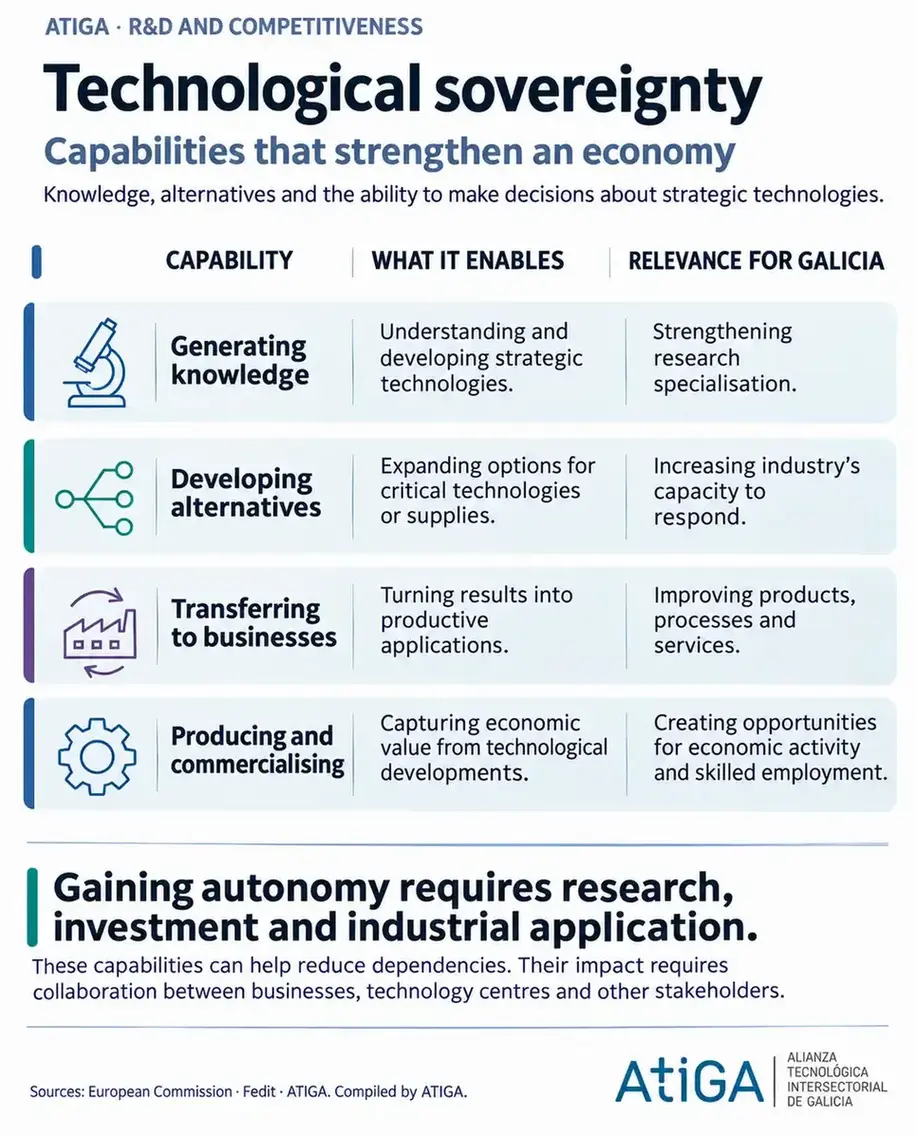
Generating knowledge, developing alternatives, transferring technology to businesses, and producing and commercialising solutions are the four capabilities shown in this article’s infographic. Their connection explains how research can help strengthen an economy’s autonomy.
Technology centres put sovereignty on their agenda
Technological sovereignty already forms part of Spanish technology centres’ approach. In its presentation of Transfiere 2026, Fedit explicitly highlighted their contribution to national technological autonomy. The federation linked that contribution to infrastructure, specialist talent and projects aimed at reducing dependence on imported technologies.
The centres accumulate technical experience that can be applied to successive developments. Their teams and facilities make it possible to investigate solutions, test their performance and work with businesses to bring them closer to production conditions.
Businesses contribute their understanding of processes, customer needs and the ability to manufacture and commercialise products. This relationship connects research with specific industrial decisions.
For Spain, strengthening this cooperation means expanding the opportunities to develop technology and apply its results within the productive sector.
Galicia can contribute specific capabilities
Galicia participates in this effort through its businesses, universities, research organisations and technology centres. Within this system, AIMEN, ANFACO-CYTMA, CETIM, CTAG, Gradiant and ITG bring together complementary specialisms.
ATIGA’s technological capabilities cover advanced manufacturing, mobility, energy and sustainability, digital technologies, new materials and food. This range makes it possible to address needs that combine materials and manufacturing, sensing and data analysis, or biotechnology and resource recovery.
Two examples illustrate their connection with technological autonomy.
Quantum communications and sensing. Gradiant participates in QUIXOTE, a Cervera Network of Excellence coordinated by Itecam. The initiative researches quantum technologies for defence and security, including secure communications and high-precision sensors. Its stated objective is to contribute to the technological sovereignty and strategic autonomy of Spain and Europe.
Recovering materials for industry. CETIM participates in RELOAD, which develops technologies to recover metals from end-of-life electric vehicles. The centre researches biohydrometallurgical processes to recover elements such as lithium, nickel and cobalt. This work aims to expand sources of supply and facilitate the return of materials to the industrial value chain.
Both projects illustrate work aimed at building capabilities. Their actual contribution will depend on the development achieved and its application.
What Galicia’s economy stands to gain
For Galicia, these capabilities create opportunities for industrial specialisation. They can help businesses develop differentiated products, introduce proprietary processes and participate in value chains requiring greater technical knowledge.
Their application can also generate activity for equipment manufacturers, engineering companies and specialist suppliers, alongside research and technical employment opportunities.
Achieving that impact requires investment and business participation. The proximity of the centres facilitates access to knowledge; making use of it requires identifying viable applications and having the resources to develop them and bring them to market.
The ambition for a more innovative Galicia takes shape through these decisions: which technologies are developed here, which companies use them and what productive activity is built around them.
A capability built over the long term
ATIGA’s centres provide a foundation for Galicia to contribute to European technological development. Maintaining it requires continuity in teams, infrastructure and collaboration with industry.
Every development that finds an application, every alternative source of supply that becomes viable and every company that gains the ability to improve its technology gives the region greater control over its decisions.
Technological sovereignty is built project by project. Its success is measured by the decisions an economy can make for itself.
ATIGA examines the future of European R&I funding and opportunities for Galicia in Brussels
Galicia’s Innovation Strategy to Mobilise Over €400 Million to Bring Innovation into Galician Industry
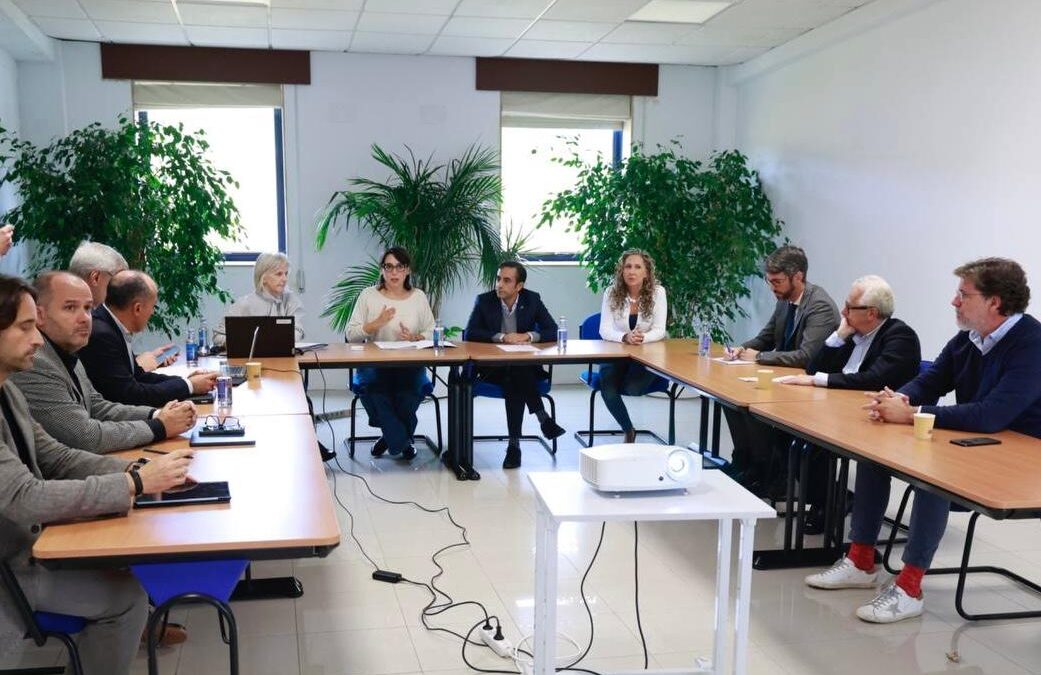
ATIGA meets with the Xunta to discuss the new strategy for industrialising innovation in Galicia
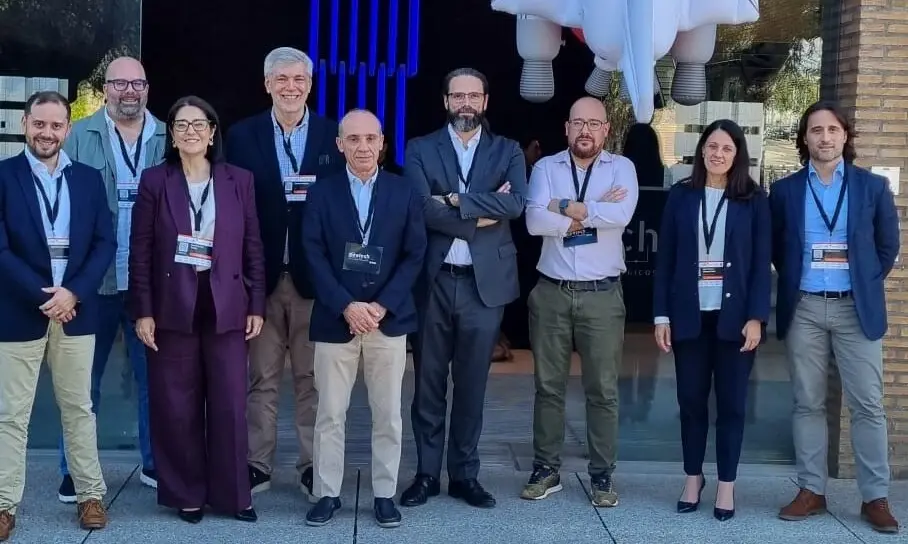
ATIGA at the forefront of Spain’s technological innovation at meetechSpain 2026

ATIGA strengthens its technological leadership after securing over €33 million for R&D&I in 2025

The ICT City of A Coruña is now a reality
Síguenos
