
Which technology professionals are Galicia’s R&D centres looking for in 2026?
Artificial intelligence leads demand, while photonics, quantum computing and digital industry complete a picture of specialisation that points to Galicia’s technological capabilities in the coming years.

The six technology centres belonging to the ATIGA alliance advertise more than 120 job vacancies a year. Analysing their current openings is useful not only for jobseekers: it also offers insight into the direction of industrial R&D in Galicia.
The vacancies open at the time of this analysis, in October 2026, provide a clear picture of the technologies requiring the greatest research capacity and, by extension, the services Galicia’s businesses may be able to adopt in the coming years.
Five technologies account for most of the demand
An analysis of vacancies at ATIGA’s centres reveals a clear concentration. Demand for talent is not scattered across unrelated fields: five technology areas account for most openings and also define the specialisations within Galicia’s R&D&I ecosystem.
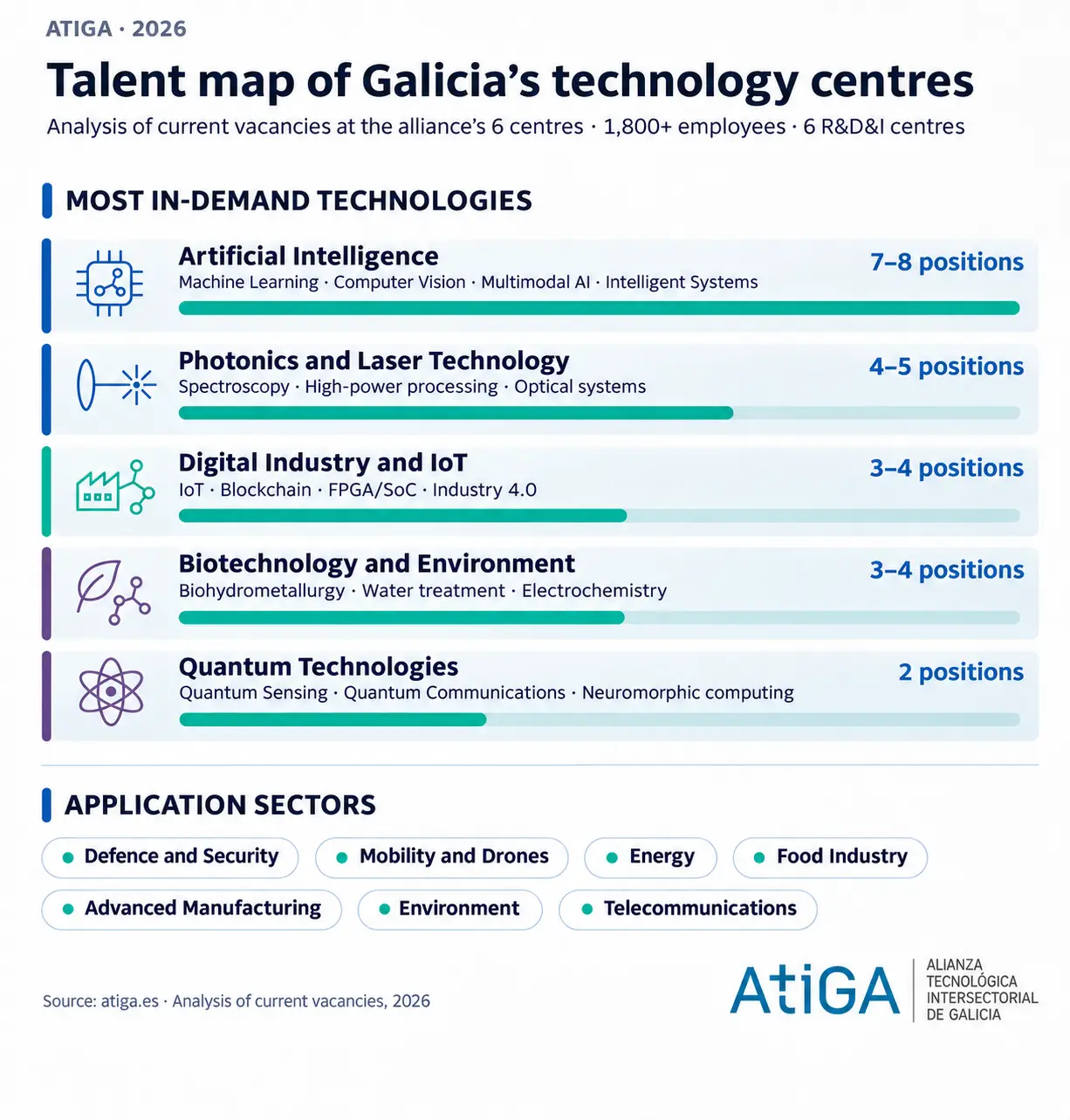
Artificial intelligence is by far the most cross-cutting field. It is an operational requirement rather than simply a trend: the centres are seeking professionals who can use AI to solve real industrial problems, from computer vision systems to multimodal architectures and models applied to production processes. Positions range from machine learning engineers to AI research team leaders, suggesting a phase of consolidation rather than initial exploration.
Photonics and laser technology, with roles specialising in spectroscopy and materials processing using high-power lasers. The vacancies focus on developing and applying optical systems for uses in defence, automotive manufacturing and advanced manufacturing.
Quantum technologies, with positions such as Quantum Sensing Engineer and Quantum Communications Engineer. These vacancies identify two specific fields of work: quantum sensing and quantum communications. Candidates should distinguish these specialisms from quantum computing and review the specific knowledge required for each role.
Digital industry and IoT, with roles ranging from blockchain developers and Industry 4.0 specialists to technicians working in smart manufacturing and connected systems. Industrial digitalisation is already established here: the centres have been applying it for years in projects with industrial clients, and recruitment demand reflects that operational maturity.
Biotechnology and the environment, with roles specialising in biohydrometallurgy, water treatment and electrochemical technologies. These fields involve materials recovery, water management and the development of circular economy processes, opening opportunities for professionals with backgrounds in biotechnology, chemistry and process engineering.
The predominant profile: senior specialists with leadership capabilities
A closer reading of the vacancies shows demand for specialists able to take on technical responsibilities and, in certain roles, coordinate teams or lead research programmes.
Most positions state the level of responsibility explicitly in their titles: “Senior”, “Team Leader”, “Head of” or equivalent management roles. There is a clear reason for this: ATIGA’s centres carry out R&D projects commissioned by industrial companies that expect results. This requires researchers who can lead workstreams, make technical decisions independently and manage teams. This differs from the model of a university laboratory or a services company.
For those seeking to join these environments, the practical implication is that the usual route involves doctoral training, a period of professional development in another research setting or experience leading technical projects in a company. Entry-level positions exist, but account for a fraction of the overall vacancies.
Some current openings require a high level of English. Others are linked to European doctoral networks such as the Marie Skłodowska-Curie Actions. There are also specific roles involving the preparation of proposals for European calls. These details reflect centres competing for projects — and talent — in the European market, beyond the regional one.
Which industrial sectors are driving demand?
The technologies in demand have practical applications in specific industrial sectors, many of them firmly established in Galicia. The vacancies identify the areas currently generating the strongest demand:
- Defence and security, with roles in applied cybersecurity, laser systems and advanced communications.
- Mobility and drones, with specialist electronic engineering roles and UAS piloting.
- Energy and the ecological transition, with project management roles in energy efficiency and renewables.
- The food and fishing industries, with roles in technical auditing, process consultancy and validation.
- Advanced manufacturing, with specialists in additive manufacturing, laser machining and composite materials.
This diversity is one of the system’s strengths: researchers working in technology centres are rarely confined to a single sector, broadening both their practical experience and their ability to transfer knowledge to industry.
What this picture tells us about Galicia’s ecosystem
The vacancies at ATIGA’s centres in 2026 point to an ecosystem focused on advanced technical specialisation, with artificial intelligence as a cross-cutting field and quantum technologies and photonics offering opportunities for differentiation in the medium term.
For people seeking R&D employment, the vacancies distinguish between roles focused on technical development and others involving team leadership or project management. Beyond identifying a technology that matches their training, candidates should examine the responsibilities and experience required for each vacancy: developing a solution, coordinating a research programme and preparing proposals are different functions, even within the same technological field.
Explore current vacancies on the careers websites of ATIGA’s centres: AIMEN · ANFACO-CYTMA · CETIM · CTAG · Gradiant · ITG.
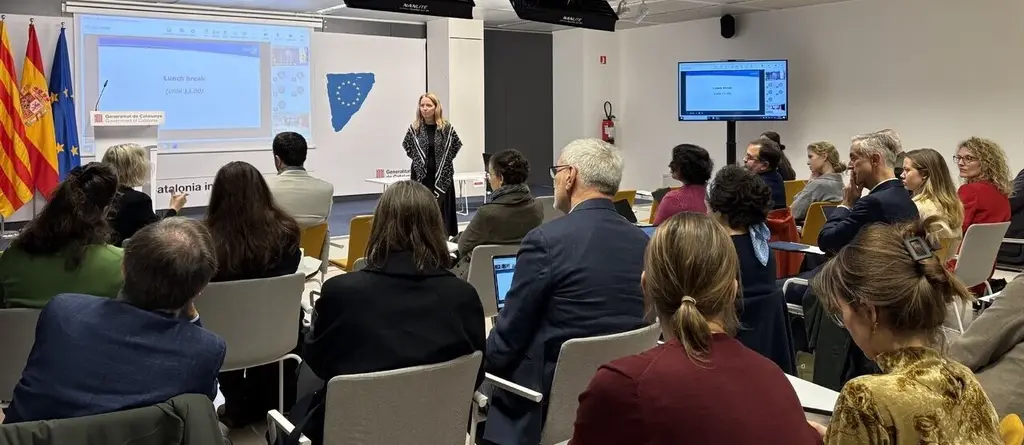
ATIGA examines the future of European R&I funding and opportunities for Galicia in Brussels
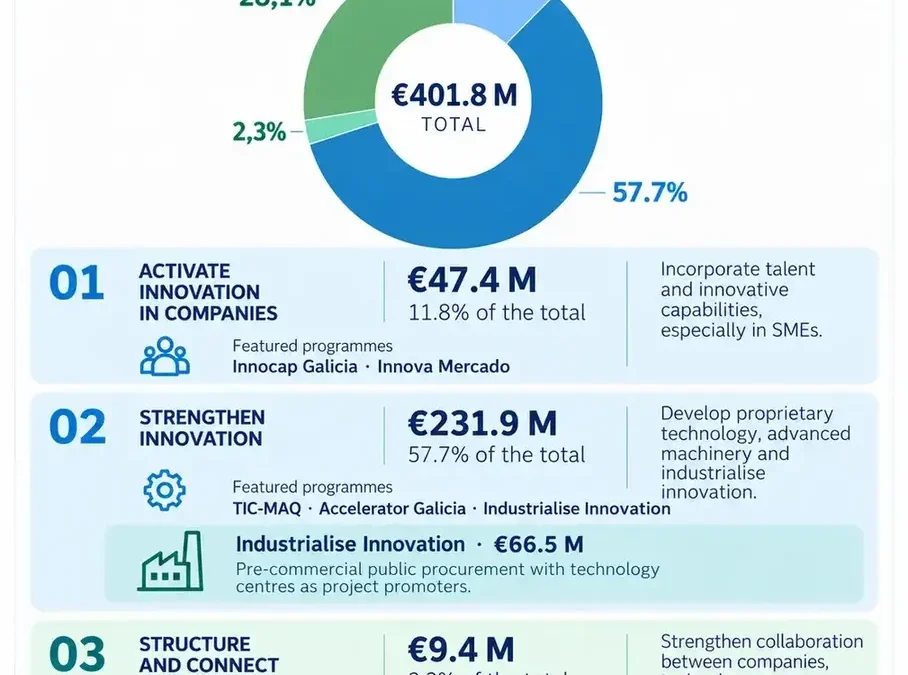
Galicia’s Innovation Strategy to Mobilise Over €400 Million to Bring Innovation into Galician Industry
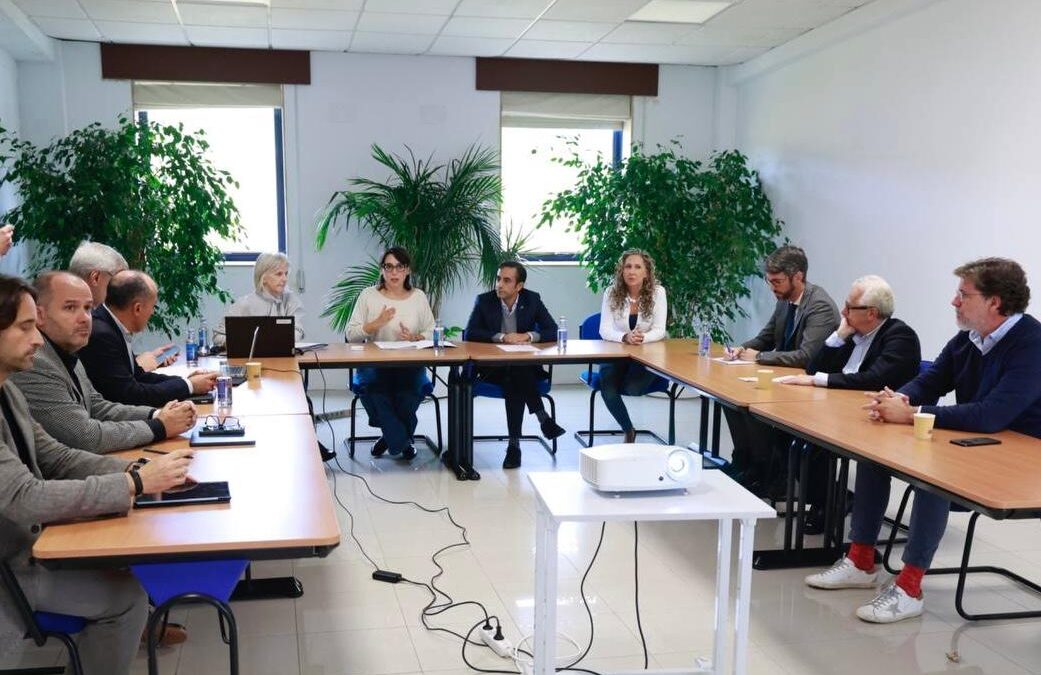
ATIGA meets with the Xunta to discuss the new strategy for industrialising innovation in Galicia
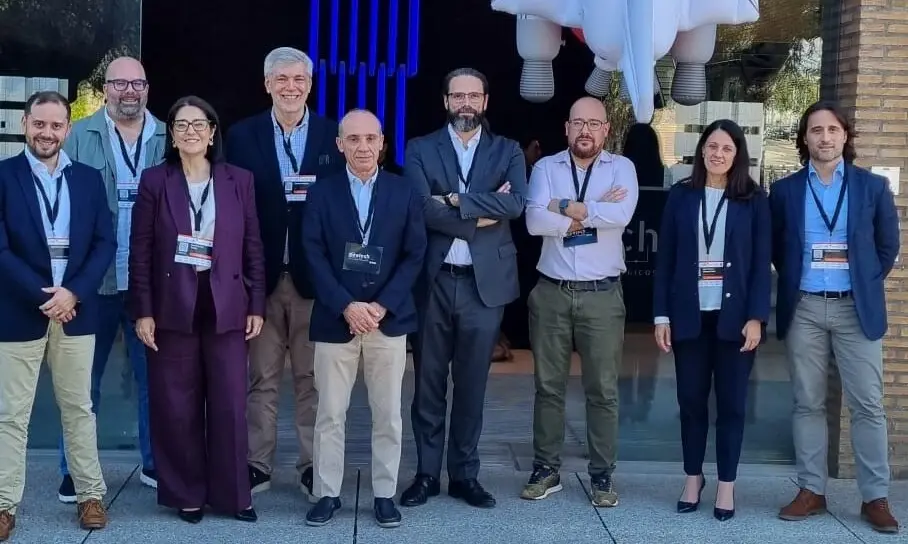
ATIGA at the forefront of Spain’s technological innovation at meetechSpain 2026

ATIGA strengthens its technological leadership after securing over €33 million for R&D&I in 2025

The ICT City of A Coruña is now a reality
Síguenos
